
Explainer
AI Safety and Alignment: The Fundamentals
What the alignment problem actually is, the real techniques used to address it today (RLHF, Constitutional AI, red-teaming), and the institutions now evaluating frontier models.
What the alignment problem actually is, the real techniques used to address it today (RLHF, Constitutional AI, red-teaming), and the institutions now evaluating frontier models.
Why how you ask still matters even as models get more capable, the core techniques with the research behind them, and the shift toward structured, agent-ready prompting.
How RAG grounds LLM answers in real, up-to-date data instead of frozen training knowledge, the architecture behind it, and how it differs from fine-tuning.
Anthropic launched a research platform connecting Claude to 60+ scientific tools, plus an internal drug discovery program for neglected diseases. What it actually does, and why the business model is the interesting part.

The Commerce Department blocked foreign access to Anthropic Claude Fable 5 and Mythos 5 over a disputed jailbreak finding, then reversed course. Here is the full timeline and why it matters beyond this one model.
Google promised Gemini 3.5 Pro general availability in June. It is now July, the model is still in limited Vertex AI preview, and the reasons for the slip are more interesting than the 2-million-token context window.

Zhipu released the open-weight GLM-5.2 within days of the US blocking foreign access to Anthropic frontier models. The benchmark numbers behind the geopolitics, and what it means if you want to run it yourself.

Microsoft launched Frontier Company, a $2.5 billion unit that embeds 6,000 engineers directly inside client operations. The move is a direct response to research showing 95% of enterprise AI pilots produce zero measurable ROI.

OpenAI is previewing GPT-5.6 as a three-tier family, Sol, Terra, and Luna, restricted to API and Codex partners at the request of the US government. Here is what each model is for and what it costs.

How AI agents actually work under the hood: the plan-act-observe loop, tool use, and why 'agentic' is a spectrum rather than a single feature you either have or don't.

How gradient descent variants, batch normalization, and learning rate scheduling actually get a neural network to converge, and why the wrong choice makes training fail silently.

How specialized computing architectures are accelerating AI development.

How self-attention, multi-head attention, and positional encoding work together, and why the transformer architecture replaced RNNs across nearly every AI domain.
An in-depth analysis of TensorFlow, PyTorch, JAX, and how the framework landscape actually looks in 2026.

How computer vision models classify, detect, and segment images, from convolutional networks to the Vision Transformers now competing with them.
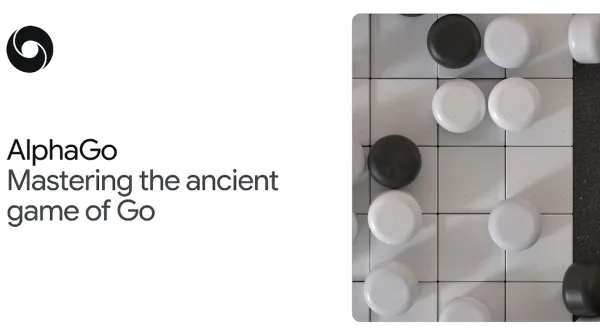
How reinforcement learning actually works, from Markov decision processes to Q-learning and policy gradients, and why it powers everything from game-playing agents to RLHF in LLMs.

Addressing bias, fairness, and transparency in modern AI systems.

Where generative AI is actually creating value in production today, from content and code to drug discovery and design, beyond the demo-stage hype.
What actually breaks when ML models move from a notebook to production, and the versioning, retraining, and monitoring practices that prevent it.

An introduction to the basics of artificial intelligence and machine learning.
How SHAP, LIME, and attention visualization actually explain a model prediction, and why interpretability is becoming a regulatory requirement, not just a nice-to-have.

How AI is being used for climate action, from smart grids to carbon tracking, and the real environmental cost of training and running the models themselves.

Exploring the next generation of neural network architectures and their potential impact.