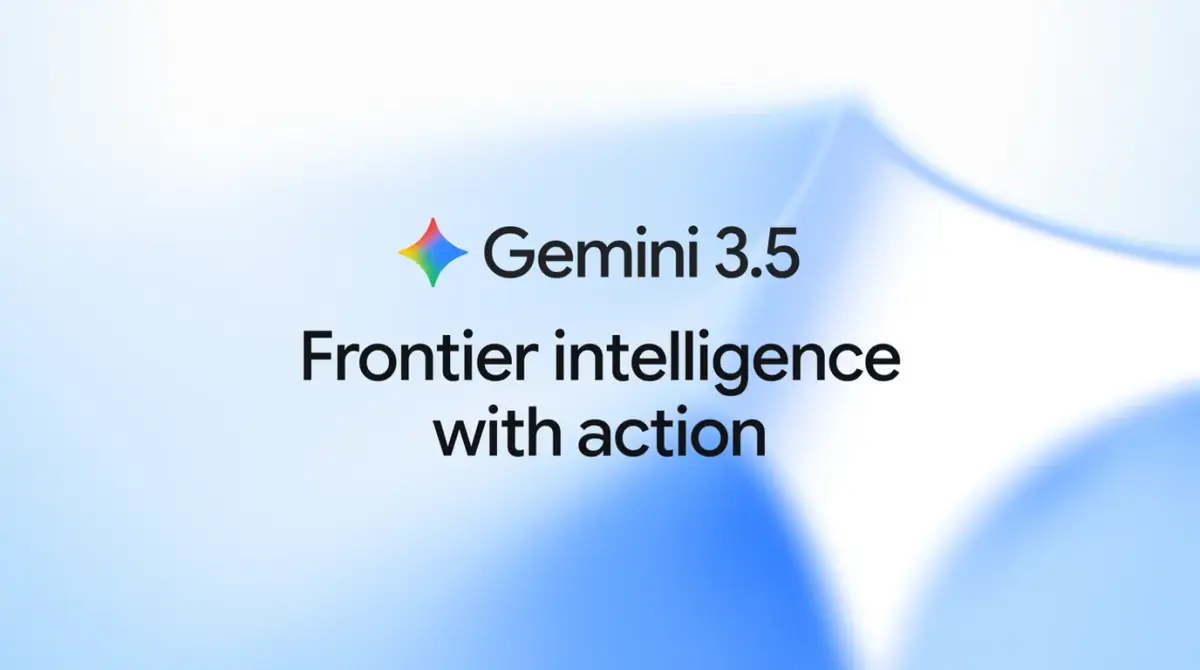
Google unveiled Gemini 3.5 Pro at its I/O developer conference on May 19, 2026. In Google’s own words at the time: “We’re also hard at work on 3.5 Pro. It’s already being used internally, and we look forward to rolling it out next month” (Gemini 3.5: frontier intelligence with action — Google). “Next month” meant June. It’s now past the first week of July, and the model is still sitting in a limited Vertex AI enterprise preview, available to a handful of approved customers plus testers on Google’s Antigravity platform and the LMArena benchmarking site, with no confirmed GA date, no published benchmarks, and no official pricing.
What was promised
The headline spec is a 2-million-token context window, double the 1-million-token window Anthropic ships on Claude Opus 4.8 today (Claude Opus 4.8 context window — Anthropic), alongside a built-in “Deep Think” reasoning mode for harder problems. On paper, a context window that size changes what’s practical to do in a single prompt: entire codebases, long legal contracts, or hours of transcript can fit without chunking or retrieval workarounds. That’s a genuinely different capability tier, not just an incremental bump, which is exactly why the delay is worth paying attention to rather than dismissing as a routine schedule slip.
Why it slipped — and the honest caveat here
Google has not published its own explanation for the delay; there is no blog.google post or public statement from the company detailing why 3.5 Pro missed its June target. What exists instead is a cluster of industry reporting pointing to token-efficiency concerns raised by early enterprise testers, coding performance not yet hitting the flagship bar Google set at I/O, and long-horizon multi-step reasoning falling short of what was demonstrated on stage — but that account traces back to unnamed sources relayed through secondary outlets, not an on-the-record Google statement, so it should be read as plausible rather than confirmed (MarketScale).
A separate, more concretely reported data point from the same window: four senior Gemini researchers left for Anthropic between June 21 and June 27, while the model was still in preview and just after the June deadline passed (Bind AI). That outlet is explicit that the reason for the departures is speculative — “disagreement on technical direction, frustration with execution velocity, or simply better opportunities elsewhere” — and treats the timing as a signal worth watching rather than a confirmed cause of the delay. Worth holding both of those facts (the delay, the departures) as separately documented and not yet causally linked by any named source.
What this means if you’re evaluating it
If your team is currently benchmarking Gemini 3.5 Pro against GPT-5.6 or Claude for a production decision, the practical takeaway is: the version you can test right now, in limited Vertex AI preview, is explicitly not the version Google intends to ship to general availability. Any conclusions drawn from the preview build on coding or long-horizon reasoning tasks specifically should be treated as provisional. Pricing is unconfirmed too — industry estimates for the preview cluster around $12-15 per million input tokens and $36-45 per million output tokens, several times Gemini 3.1 Pro’s published rate, though Google has not confirmed final GA pricing.
| Model | Context window | Status (as of July 7, 2026) |
|---|---|---|
| Gemini 3.5 Pro | 2,000,000 tokens (announced) | Limited Vertex AI preview; no GA date |
| Claude Opus 4.8 | 1,000,000 tokens (shipping) | Generally available |
| GPT-5.6 (Sol/Terra/Luna) | Not yet disclosed | Limited preview partners only — see our coverage |
The context-window arms race, and its limits
A 2-million-token window sounds like an unambiguous win, but the industry’s own recent history is a reason for caution rather than excitement alone. Long-context benchmarks have repeatedly shown a gap between a model’s advertised context length and its effective context length — the point past which retrieval accuracy inside that window actually degrades. A model that can technically accept 2 million tokens but starts losing track of details past the first few hundred thousand isn’t delivering the capability the number implies; it’s delivering a bigger version of the same problem smaller-context models already have. That’s precisely the kind of thing enterprise testers are reportedly flagging around token efficiency, and it’s why the raw context-window number is the least reliable spec to compare models on until independent, needle-in-a-haystack-style evaluation exists for the GA release.
Competitive pressure on the timeline
The delay also has to be read against the calendar it’s happening on. OpenAI shipped GPT-5.6 into limited preview in the same window, and Anthropic spent part of June and July dealing with the Fable 5 export-control freeze rather than a competing release — our coverage here. That means Google’s Gemini 3.5 Pro slip isn’t happening in a vacuum where being late costs nothing; every week of delay is a week competitors get to set the frame for what a frontier model release looks like right now. The fact that Google chose to delay anyway, rather than ship a version it knew fell short on coding and reasoning, is arguably the more disciplined call given how badly a well-publicized quality miss on GA day would compound against an already crowded release cycle — but it’s a bet that only pays off if GA actually lands with the gaps closed, not with another slip.